These reflections have been provided by Bronwyn’s sister.
Bronwyn is a happy, optimistic person with an infectious laugh, often giggling at things we don’t know She is resilient and a fighter since birth and being so vulnerable to people for all of her needs, she bounces back from adversity She is clever, a learner and is always listening.
In 1968, when Bronwyn was 11, our parents made the heartbreaking decision at the advice of doctors at the time to move Bronwyn to Hillcrest Hospital as mum could no longer manage her growing body at home. When Strathmont Centre opened in 1971, Bronwyn moved to live with other people with disabilities in villas, 2 people per bedroom with shared common areas, run by the state government and staffed by nurses, and for a while this was better. Our family took Bronwyn out to visit with our grandparents every Saturday, no equipment, no training, no supports of any kind, this was our normal family life. We listened to records, sang every song at the top of our lungs, shared a family lunch, played games and went through the trauma of returning her back to institutional care at the end of the day. In 2006 Bronwyn moved due to the closure of Strathmont centre to a purpose build group home in Sturt, two houses for 5 residents each, built side by side, still run by the SA state government, but this time staffed by lifestyle attendants. They had a bus accommodating wheelchairs, went grocery shopping, each person had their own bedroom and furniture, the staff helped them to find meaningful ways to spend their days, and this was better again for a while. Each change was an improvement, but the systems, people, facilities and ideals were eroded over time. Bronwyn also experienced significant abuse, neglect and trauma in these facilities. Choice and control, dignity, purpose and value were systematically not supported or even understood by staff.
Family circumstances changed and Bronwyn’s care fell to her siblings. We become aware of our responsibility to our sister, the great harm that was happening to her and the extreme difficulty to effect change. In 2017, the NDIS allowed us to bring some control back into Bronwyn’s life and find better supports to improve her life. As a way into effecting change for Bronwyn, we setup Bronwyn’s social funding separately to her SIL so we could engage a different provider to support Bronwyn to go out and participate in the community. The search was on for a provider we could trust and understood what we were wanting for Bronwyn. One of the sisters had been a support worker and worked for CLP, she advised us to reach out if we were looking for a company that were ethical and understood our situation.
I reached out to CLP and met with Jane Barrett. It was enlightening and exciting, they were assessing me and our family as much as I was assessing them. It was clear, they were invested in developing a good life for Bronwyn and supporting our family to learn how to do that.
From the beginning, with CLP’s Community Living Services I was working with people who understood that people with disabilities have the right and deserve a good life of their choosing. This was a given, I didn’t have to justify feeling this way and they encouraged and supported our family to grow our vision and expectations of what was possible for Bronwyn, to see her as a person who can express herself, make choices and be involved in determining her own life, and not as a set of disfunctions. They supported us to find like minded people in the community who were examples of what could be and had experience to share, to find our tribe. They supported us to find the right people to be directly supporting Bronwyn and providing opportunities to develop relationships and value in the community
Over the last 5 years, Bronwyn has come out of the shroud of chronic depression. Bronwyn’s verbal communication has increased and continues to do so. She is participating in her own life by paying for her own shopping, ordering her taxis, choosing what she does, where she goes and what she likes to do.
She is responsive, demanding and makes herself seen, heard and remembered. She shows us she values herself in these roles by her feedback, excitement to engage in these activities and with these people and it is clear the people she is involved with value her in these roles.
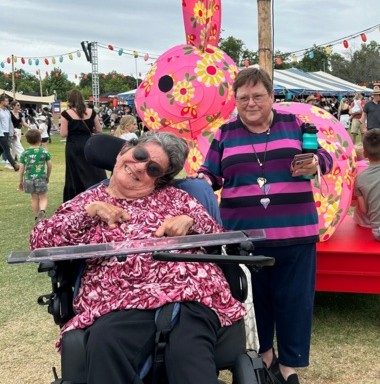
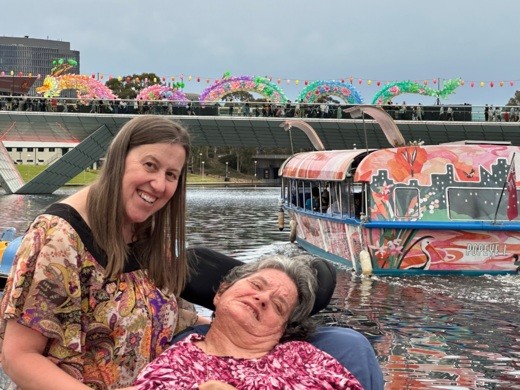
Bronwyn has been able to learn how to be a greeter at functions, become a recognised and valued member of her local community, including being an active library member, a member of a local choir, a member of a local church community and make friends with people who have common interests such as beading. She has developed friendships with people who enjoy her company and choose to be involved in her life.
Bronwyn’s siblings made connections with organisations that also held the same values and were supported to grown those connections to find services and opportunities to improve Bronwyn’s situation. Connecting with independent and skilled OT, support coordinator, community living facilitator, physio, psychologist, speech pathologist, etc to assess and advise on Bronwyn’s support needs and act on implementing them. Including alternative housing options such as living in her own apartment.
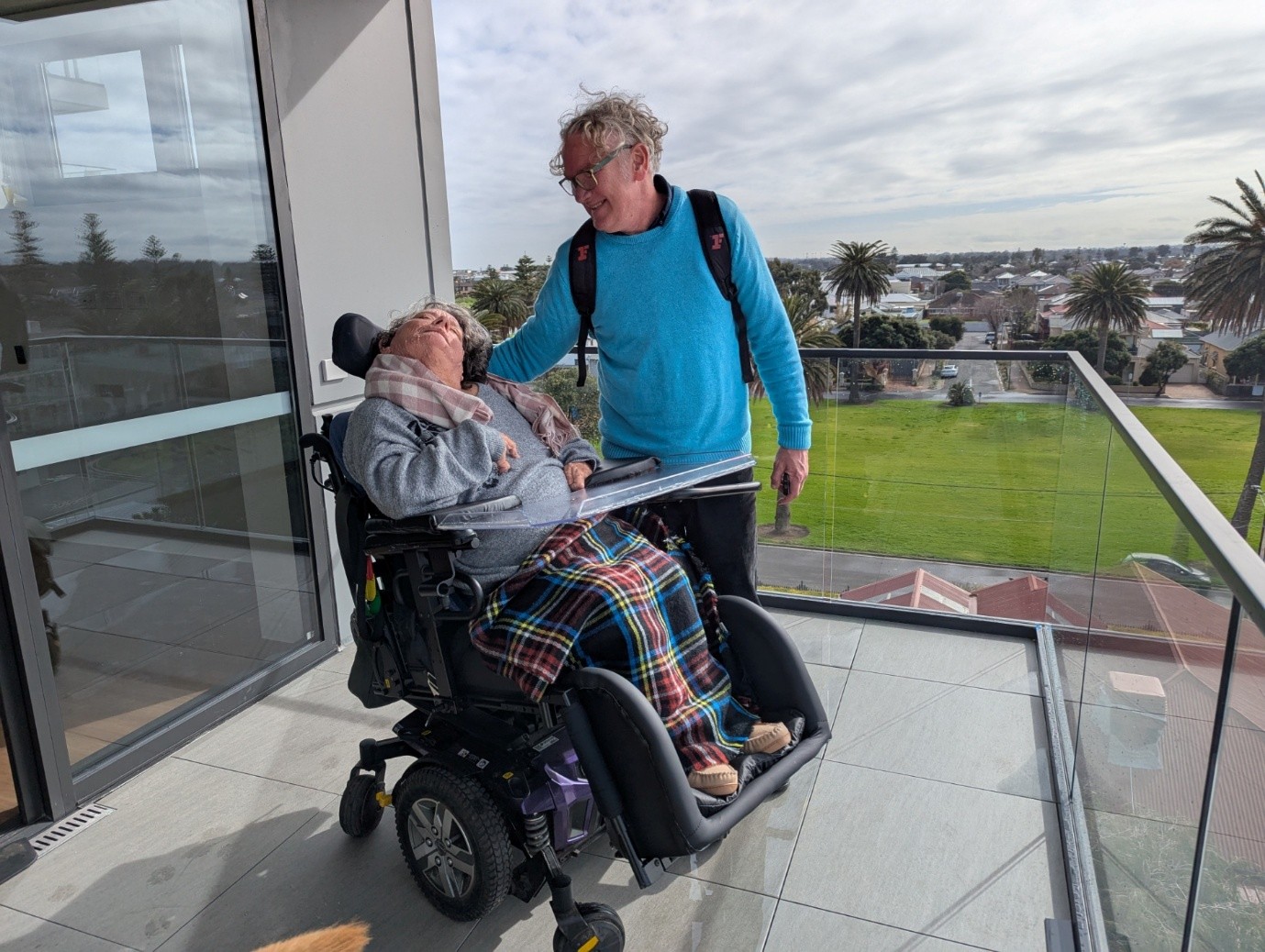
In September 2025, this resulted in Bronwyn moving into her own apartment, setup for her specific needs and with a team of people dedicated to seeing her thrive.
Bronwyn will have the opportunity to choose to grow and be whatever she wants for the rest of her life. She will be supported in whatever way she chooses to develop, she will live in peace, with friends, neighbours and a community in which she belongs and fits.