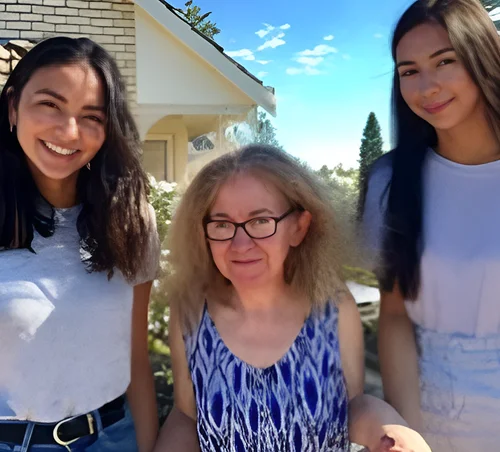
Bring together a network of trusted people to be more involved in your life.
Through facilitated gatherings and guidance, the members of your Circle of Support will:
CLP has been facilitating Circles of Support for more than 20 years.
Your Circle of Support facilitator will spend regular time with you each fortnight. In this time they will get to know you and what's important to you.
They will learn about the people in your life, and will help you to identify good trusted people to invite in to be part of your Circle of Support.
Your facilitator will help you to document your vision for your life - what's important to you, what you like doing, what you want to do more of, and what your hopes and dreams are. The circle will use this as a guide on how they can be more involved and support you to live the life that you want now and into the future.
The facilitator will reach out to your circle members and coordinate bringing everyone together for regular gatherings, about every 6 weeks.
You might host the gathering in your home, a circle member's home, or out at a local cafe or park. There is usually a meal or food shared.
At the gatherings, you will have a chance to talk about things that are important to you. Maybe you have an event or decision coming up that you would like to talk to your Circle of Support about.
After each gathering, your facilitator will work with you to put together circle notes, a record of who was there, what was discussed, and anything that people said they would do. The facilitator will follow up with people to keep their commitments.
A key piece of work for Circle facilitators is find common interests and opportunities for you to catch up with your Circle members between gatherings. Perhaps there is a show you would like to see, a sport that you love to watch? Up until now you might have missed out, or gone with paid support. Wouldn't it be better to go with a friend? Your facilitator will find out if someone in your Circle might like to go with you, and will do the work to make it happen.
The facilitator will partner with your Circle of Support members so that they can learn more about how to support you as a friend and ally. Circle members will be invited to attend workshops and training sessions together with you. We find that having two more more people sit together creates the ideas and energy that can be taken back to the circle to make things happen.
In this video created by Community Resource Unit (CRU), Circle facilitators talk about the role and what they have learned about facilitating circles effectively. The video is 10 minutes long
The Circle of Support is made up of people who you decide you would like to invite in. The facilitator will help you think about who to invite.
Circle members might be your aunts, uncles or cousins, neighbours or former teachers. Sometimes there are people at sporting clubs, churches and community groups who stand out from the rest, and are already showing they are interested in what's happening in your life.
Your parents and siblings can be part of the Circle of Support, but it's up to each person and their family to decide what's right for them.
In this video by Community Resource Unit Ltc (CRU), Circle Members reflect on what it means for them to be invited, included and involved in a Circle of Support.
The video is 11 minutes long
Families usually have values and expectations that guide the decisions they make about raising and supporting their loved ones. They might not have ever called it a vision or written it down.
At CLP, we talk to the person and their families about the importance of holding a vision and the power of sharing the vision with others.
A person's vision for their life should include all life domains - the person's finances, health, wellbeing, spiritual fulfilment, work, community, home, and relationships.
This video about Hannah's community connections starts with the vision that Hannah's parents set for her from the very start.
CLP is an NDIS registered organisation and can provide services for people who are plan managed, self managed or agency managed.
Community Living facilitators, Micro Enterprise coaches and Circle of Support facilitators can be claimed through Capacity Building funds under the relevant category:
Professional fee structure 2025-26, Capacity Building (PDF)
Please contact us to discuss your circumstances if you would like a quote for services or have questions about invoicing.
Support workers and personal assistants to micro enterprise can be claimed from Core supports under:
Individual living options exploration and design is also under core funding.
Our facilitators and coaches work from home based offices and meet with people we support in their own homes and local communities.
This enables us to provide a good reach across metropolitan Adelaide, and into some parts of the Adelaide Hills and Fleurieu Peninsula.
We recruit workers for your team from your local area.
Please contact us to discuss your individual circumstance and consider if CLP services are the right match for your situation.
You can call us during business hours on 8384 7866 or leave your details for a call back using our Service Enquiry form.
The CLP admin team is based at our office at Christies Beach.
Workshops and learning events are held in a variety of locations.